

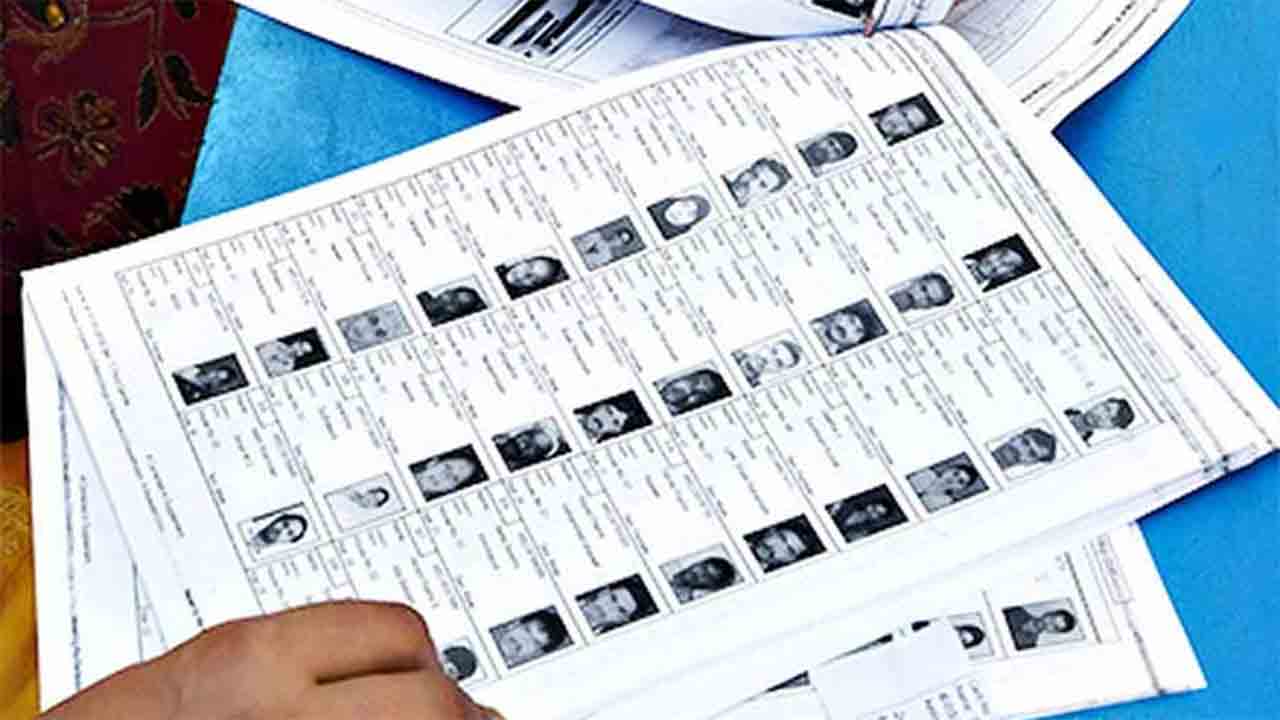
SIR process in West Bengal concludes as final voter list awaits publication. Fresh guidelines on acceptable documents raise transparency concerns and fears of voter exclusion ahead of elections.
SIR ; Post-hearing directive on acceptable documents sparks questions over transparency and timing
Kolkata | February 19, 2026
Qalam Times News Network
SIR proceedings for the Special Intensive Revision of the voter list in West Bengal have formally concluded, and attention has now shifted to the publication of the final electoral roll. Yet, even after the extended phases of document submission, draft publication, and hearings over disputed entries, a new set of instructions has reportedly been issued clarifying which documents will be considered valid by the Election Commission of India. The timing of this directive has triggered widespread concern.
The revision exercise followed a structured path: first, applications supported by documents; then the release of a preliminary draft; and finally, hearings based on objections and document verification. However, the announcement of fresh guidelines after the deadline for submissions has left many questioning whom these instructions are meant for. If they are intended for officials preparing the final roll, critics argue that such clarity should have been communicated earlier. In the midst of the SIR process, citizens had stood in long queues, submitting paperwork under strict timelines. Informing them of revised criteria only after the window has closed appears, to many, both confusing and unfair.
There has been little official explanation regarding the rationale behind the delayed clarification. Observers point out that the communication surrounding the revision exercise has largely been one-sided, offering limited scope for public engagement or dialogue. In several instances, operational instructions related to SIR were reportedly circulated informally, including through messaging platforms, raising questions about procedural transparency and institutional accountability.
The state’s Chief Minister is said to have sought clarification directly from the Election Commission but was reportedly dissatisfied with the response. The matter ultimately reached the Supreme Court, where arguments were presented on behalf of affected voters. While political interpretations of these developments vary, what remains unresolved is what some analysts describe as a “logical discrepancy” — a gap between official procedures and public understanding that has not been convincingly bridged.
Legal experts caution that once the final voter list is published, individuals whose names are excluded will have limited recourse before the upcoming West Bengal Assembly elections. Although they may apply for inclusion through Form 6 after the polls, there is no provision for disposal of such applications prior to the election schedule being announced. Under the Commission’s standard operating procedure, no revision window exists between the final roll publication and the declaration of the election calendar. This has intensified concerns over potential disenfranchisement.
Critics argue that the pace and urgency surrounding the revision process stand in contrast to the central government’s perceived reluctance toward broader nationwide exercises such as census or caste-based enumeration. The accelerated timeline for voter list scrutiny in an election-bound state has therefore drawn political attention and speculation over intent.
At its core, the debate returns to a fundamental democratic principle: while ensuring that no ineligible voter remains on the rolls is essential, it is equally vital that no eligible citizen is excluded due to administrative ambiguity or procedural haste. A democratic framework demands balance — vigilance against irregularities, but also protection of lawful voting rights.
With the final electoral roll yet to be published, stakeholders across the political and civil spectrum are watching closely. Whether the SIR exercise strengthens electoral integrity or deepens mistrust may ultimately depend on how transparently and fairly the concluding phase is handled.