
Silence over Ayatollah Ali Khamenei’s killing triggers political storm in India as Sonia Gandhi questions PM Modi’s foreign policy stance and calls for parliamentary debate.
Qalam Times News Network
New Delhi | March 1, 2026
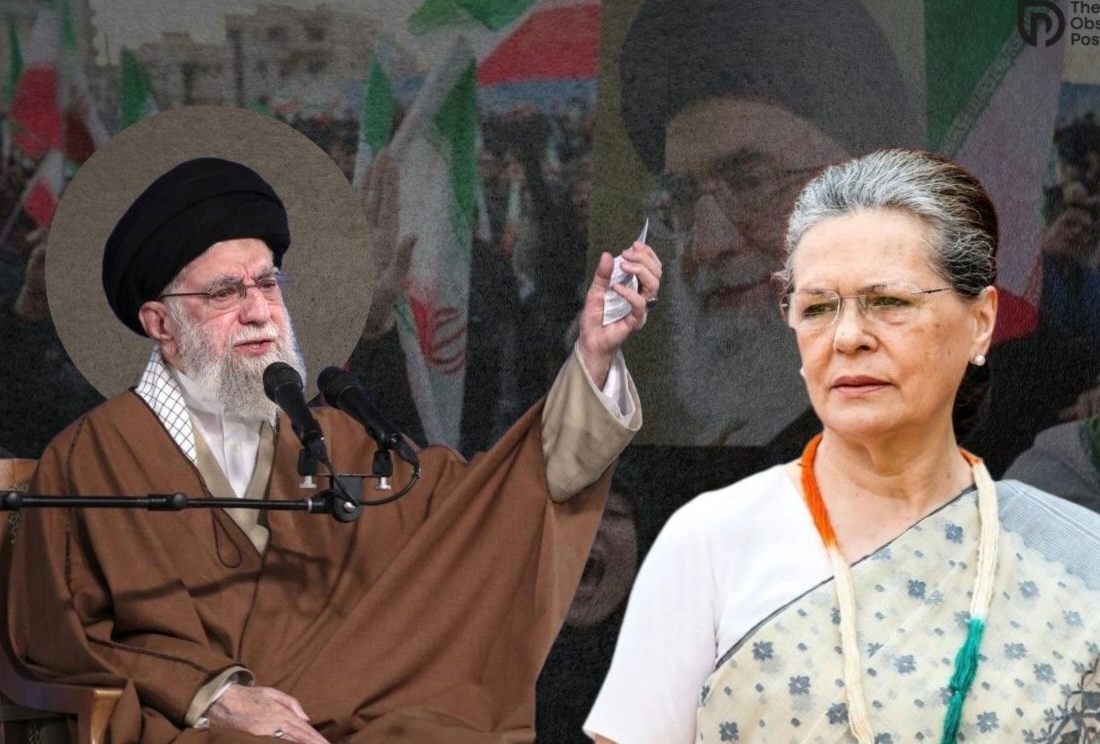
Silence from Prime Minister Narendra Modi on the reported killing of Iran’s Supreme Leader has ignited sharp political debate in India. After Tehran confirmed that Ayatollah Ali Khamenei was killed in joint U.S.-Israeli strikes, opposition leaders began questioning why New Delhi had not issued a direct statement. The absence of a clear response from Narendra Modi has drawn scrutiny across diplomatic and political circles.
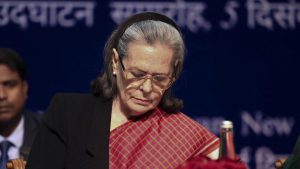
Congress Parliamentary Party Chairperson Sonia Gandhi openly criticized what she described as prolonged Silence, arguing that it raises serious concerns about India’s foreign policy direction and credibility. In remarks published by a national English daily, she said the matter should be discussed candidly when Parliament reconvenes for the second phase of the Budget Session on March 9. According to her, avoiding a firm position on such a major international development sends the wrong message at a time when global stability is fragile.
Tehran announced on March 1, 2026, that Khamenei had died a day earlier following coordinated airstrikes allegedly carried out by the United States and Israel. The incident has dramatically escalated tensions in West Asia and triggered reactions from several world capitals. While many countries issued either condolences or condemnations, India’s Ministry of External Affairs limited its response to a general appeal for restraint and dialogue, without mentioning Khamenei directly.
Critics point to precedent. When Iran’s former President Ebrahim Raisi died in a helicopter crash in 2024, India conveyed formal condolences. The contrast has fueled debate over whether the current stance reflects strategic caution or political discomfort. Observers also recall how swiftly India condemned Pakistan’s military actions inside Afghanistan in the past, highlighting what they see as inconsistency in diplomatic responses.
The timing has intensified the controversy. Just days before the strike, Prime Minister Modi visited Israel and met with Prime Minister Benjamin Netanyahu, emphasizing cooperation against terrorism. Soon after, military operations involving Iran began. Modi later spoke by phone with UAE President Mohamed bin Zayed Al Nahyan, condemning missile attacks targeting the Emirates and urging de-escalation during a subsequent conversation with Netanyahu. However, he did not publicly address Khamenei’s reported killing.
Sonia Gandhi described this absence of a direct statement not as neutrality but as a “dereliction of responsibility.” She argued that India must stand firmly for sovereignty and peace, and reclaim what she called its moral authority on the global stage. “When a nation refrains from articulating a clear stance on a major international issue, it risks weakening its credibility,” she reportedly said.
The controversy has now become a central political flashpoint, with the opposition demanding transparency and a full debate in Parliament. As tensions in the Middle East continue to rise, India’s calibrated diplomatic approach is under intense examination at home.