
Saffronisation debate intensifies as NCERT faces criticism over textbook revisions, including history deletions, Darwin’s theory removal, gender bias concerns, and ideological curriculum changes.
Qalam Times News Network
New Delhi | February 27, 2026
Saffronisation Concerns Surround NCERT Curriculum Changes
Saffronisation has once again become the centre of a growing national debate as the National Council of Educational Research and Training (NCERT) faces criticism over sweeping revisions in school textbooks. The controversy resurfaced following a Supreme Court directive related to one of its publications, but the larger debate over curriculum changes has been unfolding for nearly a decade.
Since 2014, critics have alleged that revisions in History, Political Science, Sociology, and even Science textbooks reflect an ideological shift. NCERT, however, maintains that several changes were introduced to rationalise the syllabus after the academic disruptions caused by the COVID-19 pandemic during 2020–21, arguing that the aim was to reduce academic burden on students.
Historians Raise Alarm Over Content Deletions
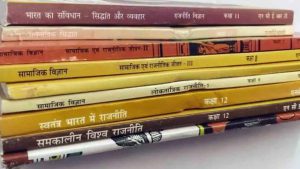
The debate over Saffronisation gained renewed intensity in 2023 when more than 250 historians, academics, and scholars issued a public statement objecting to significant deletions from Class 12 History textbooks. Among the removed sections were detailed accounts of Mughal courts, references to the 2002 Gujarat riots, discussions on the Emergency period, the Naxalite movement, Dalit writers, and various social movements.
Prominent signatories included historian Romila Thapar, economist Jayati Ghosh, historian Mridula Mukherjee, academic Apoorvanand, historian Irfan Habib, and historian Upinder Singh. They argued that the selective removal of content risked distorting historical understanding and depriving students of a comprehensive and critical perspective.
The group contended that such omissions appeared politically motivated rather than academically justified, urging NCERT to restore the deleted material. The council, however, did not reverse the changes.
Scientific Community Protests Darwin’s Removal
The controversy extended beyond social sciences into science education. In 2023, over 1,800 scientists and educators from leading institutions such as Tata Institute of Fundamental Research, Indian Institutes of Science Education and Research, and Indian Institutes of Technology wrote an open letter objecting to the removal of Charles Darwin’s theory of evolution from Class 9 and 10 textbooks.
They argued that evolutionary theory forms the foundation of modern biology and is essential for understanding biodiversity, fossils, and human origins. A subsequent appeal reportedly gathered over 4,500 signatures, warning that excluding evolution could weaken scientific reasoning and encourage unscientific beliefs.
Sociologists Yogendra Yadav and Suhas Palshikar, who had served as chief advisors for Political Science textbooks, later sought removal of their names from revised editions. They stated that significant changes had been made without consultation, calling the alterations academically unsound and politically biased.
Gender Bias Allegations Resurface
Concerns about NCERT textbooks are not new. In 2017, a study conducted by the NGO ActionAid claimed that textbooks from Classes 2 to 5 reinforced gender stereotypes. According to the analysis, male characters were predominantly portrayed in professional and leadership roles, while female characters were largely confined to domestic responsibilities.
The report noted a visible imbalance in textbook illustrations, with men appearing far more frequently than women. It recommended gender-neutral language, early gender education, and teacher sensitisation programs. In 2022, a Parliamentary Standing Committee advised NCERT to reassess textbooks for gender bias and include more diverse role models for girls. While NCERT promised reforms under a new National Curriculum Framework, critics argue that progress has been slow.
Literature and Ideological Disputes
The removal attempt of the poem “Sabse Khatarnak” by Punjabi poet Avtar Singh Pash also drew widespread criticism. The poem, often interpreted as a critique of extremism, was eventually retained following public backlash.
Reports indicate that across 182 textbooks for Classes 11 and 12, over 1,300 modifications were introduced. Some chapter titles were altered, including changing “Anti-Muslim Gujarat Riots” to “Gujarat Riots.” New chapters highlighting government initiatives such as Swachh Bharat, Beti Bachao, Digital India, and GST were reportedly added, while sections on Indo-China relations, agrarian issues, and urban labour histories were removed or reduced.
Additional revisions included expanded discussion on the abrogation of Article 370 in Jammu and Kashmir, critical commentary on secularism, and new interpretations of Mughal rule and the Partition of India. Several academics have questioned the historical grounding of certain narratives, arguing that textbook neutrality and academic rigour must remain paramount.
A Continuing National Debate
The ongoing dispute reflects broader tensions over how history, science, and civic values should be presented to young learners. While NCERT maintains that textbook revisions are part of routine academic review and syllabus rationalisation, critics view them as part of a deeper ideological realignment of educational content.
As discussions continue, the debate over curriculum integrity, academic freedom, and balanced representation in school education remains firmly in the public domain.