
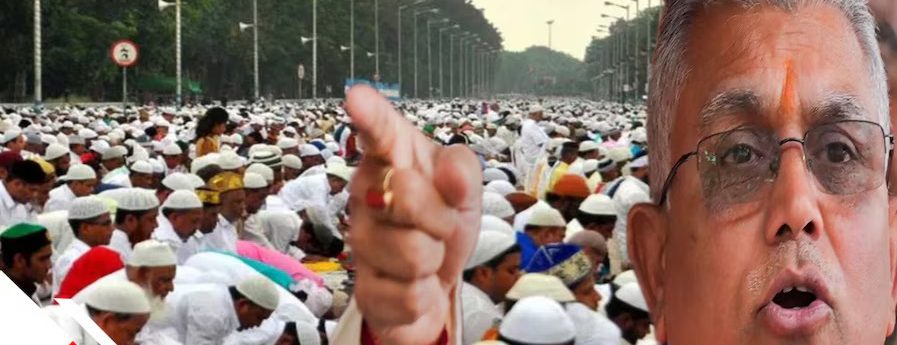
Red Road Eid namaz sparks controversy as Dilip Ghosh questions public road prayers, calling for regulated religious gatherings and uniform civic rules in Kolkata.
Senior BJP leader says public religious gatherings must follow uniform civic norms, sparks fresh debate over Eid prayers on Red Road in central Kolkata.
Qalam Times News Network
Kolkata | 22, February 2026
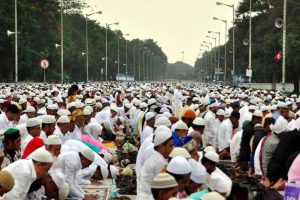
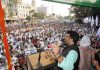
Red Road became the center of political debate on Friday after senior BJP leader Dilip Ghosh raised objections to the practice of offering Eid namaz on the iconic stretch in central Kolkata. Speaking during his morning interaction with reporters, he questioned whether public roads should be used for large-scale religious gatherings, arguing that democratic systems cannot permit indefinite road blockades.
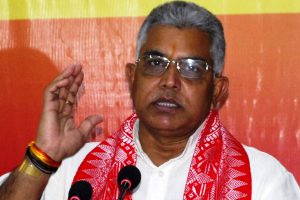
Referring specifically to Red Road, Dilip Ghosh said allowing Eid prayers on such a prominent public thoroughfare sets a precedent that may become difficult to regulate later. He maintained that while religious freedom is guaranteed, it must operate within civic discipline and uniform rules. According to him, if road closures for prayers become normalized as a matter of “right,” any future restriction could trigger tension.
Ghosh suggested that namaz is traditionally offered in mosques and that for large congregations such as Eid, designated Eidgah grounds or open fields with prior permission are more appropriate. He pointed out that other states have restricted religious gatherings on busy roads, arguing that similar standards should apply everywhere.
The BJP leader also alleged that the state government’s approach to public religious events is politically motivated. Without naming individuals, he hinted that visible permissions for mass prayers are sometimes projected as symbolic gestures toward specific communities. However, he added that such optics could create resentment among other sections of society.
Red Road, a ceremonial avenue in Kolkata often used for official parades and large gatherings, has hosted Eid prayers in the past with administrative clearance and security arrangements. Supporters of the practice argue that it reflects the city’s inclusive traditions and is conducted in coordination with authorities to ensure minimal disruption.
The remarks have reignited discussion around balancing religious expression with civic order, especially as West Bengal heads toward a politically charged period ahead of the 2026 Assembly elections.