
A detailed report on Shamim Ahmed’s historic struggle for Urdu as a Mother Tongue and a critical analysis of the current teacher vacancies and Urdu Academy leadership in West Bengal.
By Qalam Times News Network
Kolkata | February 21, 2026
The essence of a human being’s identity is rooted in the lap of their mother, and their identity is defined by their Mother Tongue. It is the first sound of childhood, the language of a mother’s lullaby, and the foundation of our existence. Beyond being a mere tool for communication, our Mother Tongue is the mirror of our civilization and the truest interpreter of our thoughts. On this International Mother Language Day, we reflect on this heritage that must be preserved for future generations.
The Man Who Transformed Bengal’s Linguistic Landscape
When we speak of the struggle for one’s Mother Tongue in West Bengal, the name Shamim Ahmed, affectionately known as ‘Qaid-e-Urdu,’ stands at the forefront. His journey is a testament to the fact that an ordinary man, fueled by extraordinary passion, can challenge the corridors of power.
During a time when nearly 10 million Urdu speakers in Bengal were deprived of their linguistic rights, Shamim Ahmed stepped forward. He recalls the betrayal of 2005-2006: “I was neither a professor nor a poet; I was an ordinary man who realized that my Mother Tongue was being treated as a political pawn. I attended an Urdu conference as a listener where the government promised second-language status, only to deny it the next day. That deception sparked the fire within me.”
From the Streets of Kolkata to Delhi’s Jantar Mantar
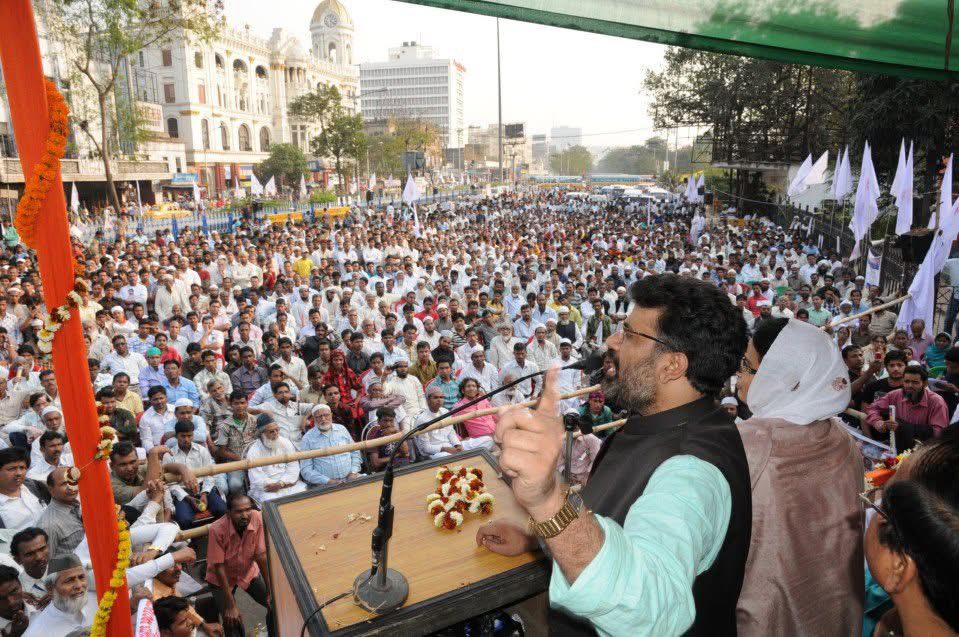
The movement led by Shamim Ahmed was not one of drawing rooms but of the streets. While the Left Front government was at the peak of its power, Ahmed mobilized thousands.
- The 2012 Surge: Thousands gathered at Kolkata’s Metro Channel, arriving from remote villages and districts like Hooghly, Howrah, and 24 Parganas.
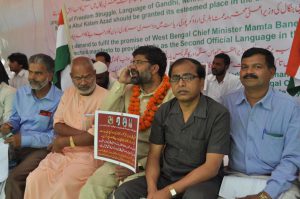
- National Protest: The movement reached the historic Jantar Mantar in Delhi, where hunger strikes forced the national leadership to take notice.
- Legislative Victory: His relentless pursuit finally saw the West Bengal Assembly pass the bill. Even then, when the Governor’s signature was delayed for nine months, Ahmed led protests at the Nadir Shah tomb until the law was finally enacted, granting Urdu its rightful status as the second official language.
The Current Crisis: Silence of the Urdu Academy?
Twelve years after achieving official status, the situation of Urdu in Bengal remains grim. Shamim Ahmed points out a heartbreaking irony: “Under the previous regime, Urdu lacked official status but schools had teachers and a learning environment. Today, we have the status, but Urdu schools are ghost buildings. Thousands of teaching posts are vacant, and students are deprived of books.”
He raises sharp questions regarding the West Bengal Urdu Academy, labeling it a hub for non-experts. “The Academy has been filled with people ranging from building contractors to those with zero linguistic background. This is a waste of public tax money. They focus on ‘Mushairas’ (poetry meets) and ‘Qawwalis’ rather than educational infrastructure and teacher recruitment.”
A Call for Resignation: Challenging the Leadership
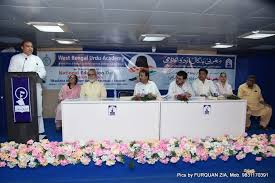
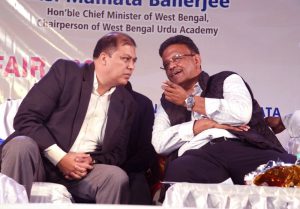
Ahmed has directly appealed to the current Chairman, Nadimul Haque, to resign if he truly loves the language. He argues that the chair of the Academy belongs to someone who has lived and breathed Urdu literature and education.
“Can someone who doesn’t know Bengali sit in the Bengali Academy? No. Then why is the Urdu Academy being used to accommodate political favorites? If the Chairman says his job is only to hold programs and not fix schools, he should show the public the letters he has written to the Minority Affairs Ministry regarding teacher vacancies.”
Conclusion: A Pledge for the Future
On this International Mother Language Day, Shamim Ahmed’s message is a wake-up call. We must not let our language become a mere subject of annual celebrations or political “shamianas.” To honor those who sacrificed for their linguistic rights, we must ensure our children inherit the sweetness of their mother’s speech through proper schooling and systemic support.
“The fight for protection was mine,” says Ahmed, “but the fight for progress belongs to the professors, poets, and officials earning lakhs in the name of Urdu. It is time they answer for the silence in our classrooms.”