
Marginalisation of Muslims in West Bengal politics: an analysis of leadership vacuum, Mamata Banerjee’s strategy, rising BJP influence, and the emergence of new Muslim parties.
Marginalisation : From the Left Front to Mamata Banerjee — has Bengal’s Muslim community been reduced to a permanent vote bank?
By Nurullah Jawaid
Kolkata, March 6, 2026
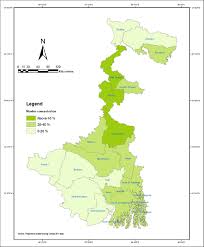
Marginalisation best describes the political condition of Muslims in West Bengal today. After the Partition of India, a significant section of the Bengali Muslim elite migrated to East Pakistan. The Muslims who remained in West Bengal were already struggling with economic, social, and educational backwardness, and the sudden leadership vacuum pushed them even further to the margins of political life.
Communal riots in the early decades after independence deepened this crisis. The 1964 Calcutta riots devastated Muslim neighbourhoods and forced many families into confined pockets of the city. Even today, Kolkata remains a major example of Muslim ghettoisation, and despite nearly eight decades since independence, no major developed Muslim locality has emerged in the city.
Before the rise of the Left Front, the Indian Union Muslim League had a visible presence in West Bengal politics, regularly winning several Assembly seats and occasionally a Lok Sabha seat. However, when the Left Front came to power, it attempted to reshape the state’s political discourse around class-based slogans. Popular slogans like “Roti, Kapda aur Makaan” pushed identity-based politics into the background.
Land reforms carried out by the Left Front eliminated Muslim landlords, but equitable land redistribution among ordinary Muslims never materialised. Over time, even mentioning Muslim identity in politics began to be seen as politically inappropriate. The result was clear: despite having a large population in the state, Muslims failed to develop a strong and independent political platform.
The direction of West Bengal politics shifted dramatically after Trinamool Congress came to power in 2011. Mamata Banerjee combined social justice rhetoric with religious symbolism in a way that simultaneously consolidated Muslim votes and created space for the BJP to expand.
Following the publication of the Sachar Committee Report, which highlighted the poor socio-economic condition of Muslims, Mamata successfully capitalised on Muslim dissatisfaction with the Left Front. While several steps were presented as gestures of “Muslim friendliness,” they also reinforced religious identity in politics.
When Narendra Modi’s rise under the BJP transformed national politics in 2014, Bengal was no exception. A party that once struggled for survival in the state rapidly emerged as a powerful challenger to the Trinamool Congress.
Muslims are spread across many districts in West Bengal, yet Muslim politics has remained largely confined to Kolkata and its surrounding areas. During the Congress era, Ghani Khan Chowdhury from Malda emerged as a strong political voice, but since then no Muslim leader has achieved statewide influence.
Successive ruling parties benefited from this leadership vacuum. Muslim politicians were given tickets and elected to the Assembly, but most remained loyal party workers rather than independent public representatives. Without a grassroots base or independent identity, their political voice remained weak.
In 2021, the Indian Secular Front (ISF) led by Abbas Siddiqui emerged on the political scene. The party attracted attention during the Assembly elections and managed to win the Bhangar seat near Kolkata. However, government pressure, organisational limitations, and its social base restricted its expansion.
Meanwhile, smaller parties such as SDPI and the Welfare Party have also attempted to mobilise Muslim voters in districts like Murshidabad. Yet organisational weaknesses and political pressures prevented them from building a stable statewide presence.
Murshidabad, where Muslims make up nearly 70 percent of the population, has recently become the centre of political developments. Controversial Trinamool Congress MLA Humayun Kabir stirred debate by announcing the construction of a mosque named after “Babri Masjid” and laying its foundation stone on December 6, 2025. He has since launched a new political outfit called the Janata Unnayan Party.
At the same time, Syed Ruhul Amin, associated with a well-known khanqah in Medinipur, has announced another political platform named the Jatiya Unnayan Party.
The sudden emergence of multiple Muslim parties ahead of elections raises an important question: are these genuine political movements, or attempts to fragment Muslim votes?
West Bengal was once known for a strong culture of political resistance and protest. Yet in the last decade and a half, that tradition appears to have weakened significantly. The long-standing issues faced by Muslims — education, economic development, and political representation — remain largely unresolved.
The difference today is that many voices that once spoke openly about these problems have either fallen silent or been absorbed into mainstream political parties. As a result, marginalisation continues to define the political reality of Muslims in West Bengal.