
Faith shaken in Deoria as demolition of Abdul Gani Shah Baba shrine sparks grief among interfaith devotees, raises questions on selective bulldozer action, communal harmony, and freedom of expression in Uttar Pradesh.
Qalam Times News Network
Deoria, Uttar Pradesh | January 2026
Faith : Women devotees, interfaith believers, and local communities question timing, intent, and impact of bulldozer action
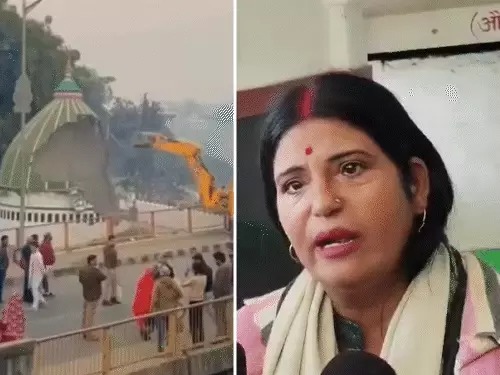
Faith lay heavy in the air across Deoria as silence gripped the town for days following the demolition of the Abdul Gani Shah Baba mazar. What began as a sudden administrative action on January 11 has since unfolded into a deeply emotional and divisive episode, stirring grief, debate, and fear across communities.
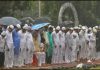
For nearly a week, conversations simmered quietly at street corners and nukkads before emerging into open discussion. Devotees—many of them Hindu women—were seen visiting the demolished site, some in tears, others standing wordlessly beside the rubble. The shrine, which had long functioned as a shared spiritual space, had drawn people from different religions seeking hope, healing, and solace.
One such devotee, Rani Tiwari, a resident of Deoria, said she was shaken when she learned that the shrine had been razed. Accompanied by her 12-year-old son, she rushed to the site, bowed at the remains, and broke down. Twelve years earlier, Rani had been working as a teacher near the shrine when she suffered a miscarriage. Medical consultations left her convinced that motherhood was no longer possible.
It was during this period that a Muslim colleague suggested she pray at the mazar during Ramadan. Rani followed the advice, visited the shrine with faith, and, she says, her life changed soon after. She conceived and later gave birth to a healthy child. Since then, faith has guided her back to the shrine repeatedly, offering chadar and donations in gratitude.
“I have never seen God,” Rani said quietly, standing near the debris. “But belief takes people to places they cannot explain. I came here with belief, and that belief gave me my son.”
On learning about the demolition, she returned once again—this time to pray for her child’s future. “I heard the mazar was being demolished, so I came with my son, had darshan of Baba, and offered money for a chadar,” she said, her voice trembling. Commenting on what many describe as “bulldozer justice,” she added that those who believe they stand above the law will one day experience the same helplessness felt by devotees today.
Similar emotions were echoed by Ajit Singh of Salempur town, about 20 kilometres from Deoria. He said he had been visiting the shrine for more than 35 years. “After offering chadar here, I was blessed with a son, and my business flourished,” he said. “Before this, I wandered everywhere in distress. It was only here that my wishes were fulfilled.”
Throughout the day, devotees continued to arrive. Some folded their hands, others touched the ground where the shrine once stood, while a few sat silently, refusing to speak. The atmosphere remained heavy, filled with disbelief and sorrow.
Local residents described the shrine as a place that transcended religious identity. “People came here with hope, not with questions of religion,” said a shopkeeper from the area. He recalled that the shrine had existed for decades and was woven into everyday life.
Police personnel were deployed around the site to prevent unrest. Officials stated that the demolition was part of an administrative drive against illegal structures. However, many devotees questioned the timing and method of the action, arguing that it deeply hurt religious sentiments and disturbed communal harmony.
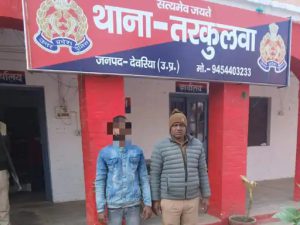
While grief dominated the scene, fear spread quietly within the Muslim community. A Muslim youth was recently arrested after expressing his views about the demolition on social media platform X (formerly Twitter). The arrest, residents said, sent a chilling message.
According to police records, Mubarak Ali of Tarkulwa was taken into custody after a controversial post drew complaints from the Bhagwa Rakshak Dal, which tagged Deoria Police online. Acting on the Superintendent of Police’s directions, the Tarkulwa police station registered a case under Sections 170, 126, and 135 of the Bharatiya Nyaya Suraksha Sanhita (BNSS). He was later produced before the SDM court in Deoria.
Since then, many Muslim residents have chosen silence over speech. Several declined to comment, citing fear of legal consequences. “People are scared,” said one resident on condition of anonymity. “Even those who want to speak are choosing not to.”
History of the Shrine
The Abdul Gani Shah Baba mazar had stood for several decades and was part of Deoria’s religious landscape. Its history, like many shrines in north India, was preserved through oral memory rather than formal records. Despite lacking documented origins, its social and spiritual relevance remained strong, particularly among women devotees.
The shrine came under official scrutiny following repeated complaints by BJP MLA Shalabh Mani Tripathi, who alleged that it stood on encroached government land. Citing revenue records and court directions, the district administration initiated proceedings.
Mohammad Rashid Khan, president of the Dargah Committee, said the administration pressured them to demolish the structure themselves. “We were told that if we did not remove it, bulldozers would arrive and FIRs would be filed,” he said. Fearing legal action similar to the Sambhal incident, the committee gave written consent.
Historian and Deoria native Ashok Pandey criticised the demolition, calling it selective and unjustified. He pointed out that thousands of temples across the country exist on encroached land without facing similar action. “This reflects selective use of state power against one community,” he said.
Recent demolitions in Bahraich—including mazars on a medical college campus and centuries-old shrines in forest areas—have reinforced concerns about bulldozer-driven governance in Uttar Pradesh. Residents and historians warn that such actions risk deepening communal divides and normalising the politicisation of religious spaces.
For many in Deoria, the rubble left behind is not just broken stone. It is the collapse of a shared space of belief, healing, and coexistence—leaving behind a silence that speaks louder than words.