
BAIL granted to nine Youth Congress activists by Delhi court over India AI Summit protest, ruling demonstration was political dissent, not organised crime.
Bail: Patiala House Court says demonstration was political dissent, not organised crime or violence
Qalam Times News Network
New Delhi | March 2, 2026
BAIL was granted on Sunday to nine Indian Youth Congress activists by a Delhi court in connection with their protest during the India AI Impact Summit at Bharat Mandapam. The court made it clear that the demonstration amounted to political dissent rather than criminal conspiracy, organised violence, or a threat to national security.
Judicial Magistrate First Class Ravi of the Patiala House Court ordered the release of Krishna Hari, Narshimha Yadav, Kundan Kumar Yadav, Ajay Kumar Singh, Jitendra Singh Yadav, Raja Gurjar, Ajay Kumar Vimal (alias Bantu), Saurabh Singh and Arbaz Khan.
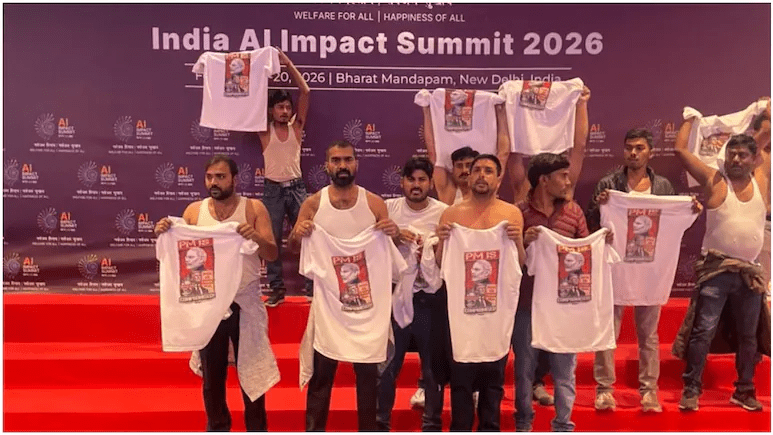
While granting BAIL, the court observed that the protest was symbolic in nature and did not cross the line into unlawful violence. The judge noted that the activists wore T-shirts carrying images and slogans critical of the Prime Minister and government policies, but the slogans were not communal, inflammatory, or inciting violence. The assembly was brief and dispersed peacefully under escort, with no evidence of property damage or panic among summit delegates.
The arrests stemmed from a February 20 protest at the India AI Impact Summit, a high-profile global event held in New Delhi. Members of the Indian Youth Congress entered the venue and staged a demonstration, removing their shirts to reveal printed T-shirts bearing slogans such as “PM is compromised” and criticism of the India–US trade deal. They also raised slogans against Prime Minister Narendra Modi and certain government decisions.
Delhi Police detained fourteen individuals, alleging that the group breached security protocols and shouted “anti-national” slogans. Authorities argued that the protest disrupted an international gathering and could potentially harm national integrity and foreign relations.
The prosecution maintained that the incident posed risks to national security and the country’s global standing. It submitted that investigations were ongoing and warned that releasing the accused could lead to evidence tampering. The state further argued that multiple charges against the activists could attract consecutive sentences if convictions followed.
Counsel representing the activists countered that the alleged offences carry maximum punishments of less than seven years. They relied on the Supreme Court’s ruling in the Satender Kumar Antil judgment, which places such cases in Category A—where bail is generally the rule rather than the exception.
The defence also emphasised that the protest was peaceful and protected under Articles 19(1)(a) and 19(1)(b) of the Constitution, which safeguard freedom of speech and the right to peaceful assembly. They argued that no violence, destruction of property, or public threat had taken place.
Rejecting the prosecution’s claims, the court held that none of the invoked offences exceeded a seven-year sentence. It stressed that extended pre-trial detention without clear investigative necessity violates the fundamental right to personal liberty under Article 21 of the Constitution.
The judge described the prosecution’s argument regarding consecutive sentencing as premature and legally misplaced at the bail stage. The order underlined that bail hearings focus on safeguarding liberty, not speculating on future convictions.
“Pre-trial detention, when detached from investigative necessity, amounts to unjustified punishment before conviction,” the court observed, reiterating that incarceration is an exception, not the norm.
Following the order, the Indian Youth Congress welcomed the court’s decision, stating that it reaffirmed the legitimacy of political dissent. The organisation maintained that it would continue raising questions about the India–US trade agreement, alleging that it undermines the interests of farmers and youth.
In a statement, the group challenged the Prime Minister over what it termed an “anti-India trade deal,” asking under what pressure such an agreement was negotiated.
With the court granting BAIL, the nine activists are now set to be released while the legal process continues.