

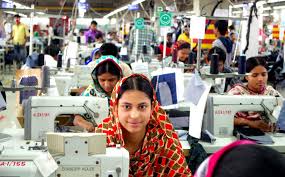
Bangladesh yarn crisis escalates as textile mills threaten February 1 shutdown over duty-free Indian yarn imports, gas shortages, and mounting financial losses affecting one million workers.
Qalam Times News Network
Dhaka | January 26, 2026
Bangladesh : Textile Workers Issue Ultimatum Over Duty-Free Yarn Imports
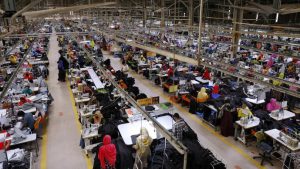
The Bangladesh yarn crisis has reached a critical juncture as textile mill workers across the nation have issued an ultimatum to shut down all operations beginning February 1 unless the government withdraws duty-free import privileges on foreign yarn. The escalating dispute centers on massive financial losses, chronic gas supply disruptions, and the closure of numerous manufacturing facilities nationwide.
Domestic spinning units are confronting an existential threat as the Bangladesh yarn crisis deepens, with mill operators demanding immediate government intervention to revoke zero-duty benefits granted to imported yarn through the bonded warehouse mechanism. The textile manufacturing sector’s predicament intensified following a formal recommendation from the Ministry of Commerce to the National Board of Revenue, urging suspension of the preferential import arrangement that local producers claim has created unfair market conditions.
Indian and Chinese Yarn Dominance Threatens Local Production
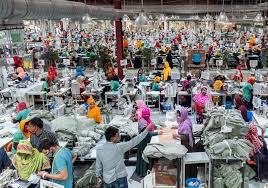
Bangladesh’s ready-made garment sector has maintained long-standing procurement relationships with international suppliers, primarily sourcing cotton yarn from Indian manufacturers and polyester yarn from Chinese exporters. This dependency stems from competitive pricing structures and superior quality consistency that foreign suppliers deliver. However, domestic textile manufacturers contend this import reliance has precipitated severe financial deterioration across the local spinning industry.
The operational environment has deteriorated significantly due to persistent natural gas supply constraints. Industry analysts estimate the textile manufacturing sector has absorbed approximately two billion dollars in losses over the preceding three to four months, attributable to gas scarcity, irregular supply patterns, and escalating energy costs. Despite continuous appeals to authorities, manufacturing facilities have not received promised subsidized gas tariffs, forcing many units to operate at roughly half their production capacity.
Financial Distress Mounts as Inventory Piles Up
The Bangladesh Textile Mills Association has documented that low-priced Indian yarn has saturated domestic markets, creating unsold inventory valued at over 12,000 crore taka (approximately $1 billion). More than fifty textile manufacturing facilities have already ceased operations, displacing thousands of workers from employment. Mill operators face mounting difficulties servicing bank loans as financial pressures intensify.
Textile manufacturers have articulated several critical demands to government authorities:
- Immediate termination of duty-free import privileges for yarn, specifically 10 to 30 count cotton yarn varieties
- Provision of subsidized and uninterrupted natural gas supplies
- Temporary reduction in Value Added Tax collection during the crisis period
- Lower interest rate structures on commercial bank financing
- Comprehensive policy dialogue with government officials to stabilize the sector
Import Statistics Reveal Heavy Indian Dependence
Official government trade data indicates Bangladesh imported approximately 700 million kilograms of yarn during 2025, representing expenditures near two billion dollars. Indian suppliers accounted for seventy-eight percent of total yarn imports, underscoring the market’s heavy reliance on cross-border procurement.
The textile manufacturers’ association has cautioned that a complete shutdown of spinning operations from February 1 could directly impact nearly one million workers throughout the country and potentially trigger broader social unrest. These concerns have been formally communicated to the interim government administration. Despite the worsening industrial crisis, authorities have not announced any Value Added Tax relief measures, further straining mills already struggling with excess inventory and declining production volumes.
Sharp Divide Emerges Between Millers and Exporters
The confrontation has revealed fundamental disagreements between textile mill operators and garment export associations. While domestic millers insist local production capacity adequately meets national requirements, the Bangladesh Garment Manufacturers and Exporters Association maintains a contrary position.
Garment export businesses argue that domestically manufactured yarn, particularly 10 to 30 count cotton varieties, commands significantly higher prices compared to Indian imports. Export associations also assert that international apparel brands specifically prefer foreign-sourced yarn and fabrics, especially from Indian suppliers, citing superior quality standards and consistency. Industry representatives warn that eliminating duty-free yarn import privileges would undermine Bangladesh’s competitive positioning in global apparel markets.
Indian Exporters Defend Current Trade Arrangement
Amit Soti, representing Indian yarn export interests, explained the economics underlying current trade patterns: “Bangladesh’s garment manufacturing sector benefits from duty-free treatment on raw material imports through bonded warehouse facilities. Eliminating bonded import privileges for yarn would increase production costs for manufacturers, as locally produced yarn carries higher prices and inferior quality compared to Indian products. Such policy changes would ultimately damage Bangladesh’s export competitiveness.”
Industry at Crossroads as February Deadline Approaches
As conflicting pressures mount from opposing stakeholder groups, Bangladesh’s textile and apparel manufacturing sector—among the nation’s largest employment generators and primary foreign exchange earners—faces a critical decision point. Without carefully balanced policy intervention, the conflict between domestic millers seeking trade protection and export manufacturers demanding competitive advantages threatens to push the entire industry into prolonged economic disruption and social instability.
The interim government faces the challenging task of reconciling competing interests while preserving both domestic manufacturing capacity and export competitiveness in an increasingly competitive global marketplace. The February 1 deadline looms as stakeholders await policy decisions that will shape the industry’s future trajectory.