

Minority Affairs Budget in West Bengal has been reduced from ₹5,713.61 crore to ₹2,165.42 crore in the BJP government’s first full budget, triggering political debate over minority welfare and Madrasah education.
Minority Affairs Budget Slashed by Over ₹3,500 Crore in West Bengal’s First BJP Budget
Qalam Times News Network
Kolkata | June 22, 2026
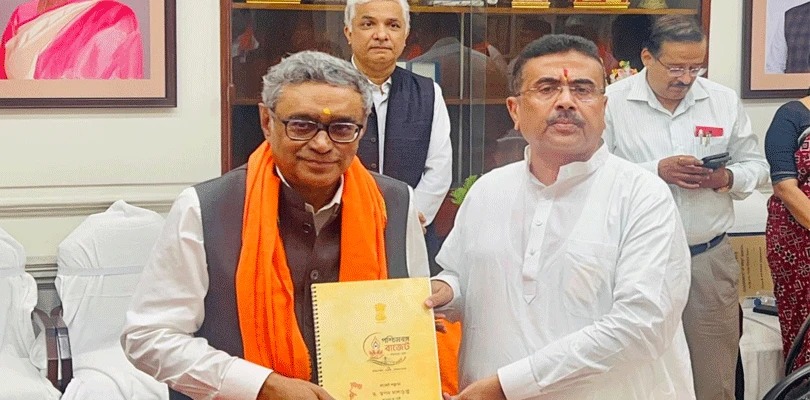
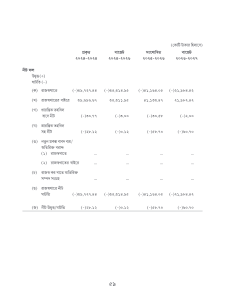
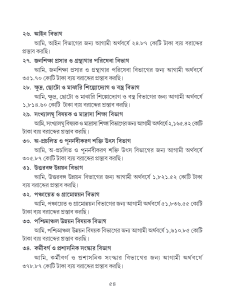
The Minority Affairs Budget in West Bengal has witnessed a dramatic reduction following the change of government in the state. In its first full-fledged budget after assuming office, the BJP-led administration headed by Chief Minister Suvendu Adhikari has cut the allocation for the Minority Affairs and Madrasah Education Department by more than ₹3,500 crore compared to the provision made by the previous Trinamool Congress government.
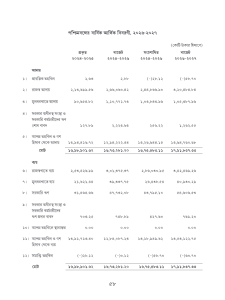
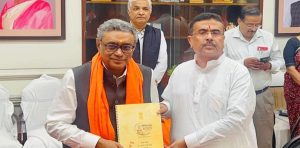
According to the budget presented by Finance Minister Swapan Dasgupta in the State Assembly on Monday, the Minority Affairs Budget for the 2026-27 financial year has been fixed at ₹2,165.42 crore. This marks a significant decline from the ₹5,713.61 crore allocated by the Mamata Banerjee government in its interim budget presented in February before the Assembly elections.
A Significant Policy Shift
The sharp reduction is being viewed as one of the most notable policy departures from the previous administration. Minority welfare and Madrasah education have long been politically sensitive subjects in West Bengal, with successive governments generally avoiding major changes in funding patterns.
Political observers note that the BJP had repeatedly criticized the previous government for what it described as “appeasement politics” through targeted welfare allocations. The latest budget appears to reflect the ruling party’s attempt to realign spending priorities toward infrastructure, regional development, employment generation and administrative reforms.
Madrasah Education: A Long-Standing Political Debate
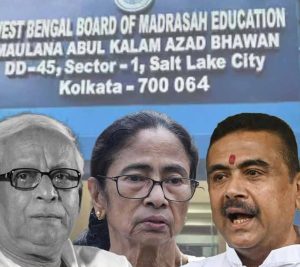
The debate over Madrasah education in West Bengal is not new. More than two decades ago, former Chief Minister Buddhadeb Bhattacharjee had advocated integrating modern education with religious instruction in Madrasahs. His remarks regarding unregulated institutions had sparked intense political controversy and resistance from various quarters.
Subsequently, efforts were made to reform and regulate Madrasah education through policy recommendations and committee reports. However, many of those proposals were never fully implemented due to political sensitivities surrounding the issue.
Over the years, the number of government-aided Madrasahs increased substantially. During the Trinamool Congress regime, several previously unrecognized Madrasahs were brought under government support, accompanied by a steady increase in budgetary allocations for minority development and educational initiatives.
Budget Cut and Political Reactions
The reduction in the Minority Affairs Budget has triggered criticism from opposition parties and minority representatives. Leaders from different political groups have accused the government of reducing support for a section of society that requires continued educational and socio-economic assistance.
However, officials familiar with government finances argue that the issue cannot be judged solely by announced allocations. They point out that in several previous financial years, a substantial portion of the funds earmarked for minority development reportedly remained unspent by the end of the fiscal year.
Some analysts contend that actual utilization of funds is more important than headline budget figures. According to this view, if the present administration succeeds in fully utilizing the allocated amount, the practical impact on beneficiaries may be less severe than the reduction suggests on paper.
Government Tightens Oversight of Unrecognized Madrasahs
Since taking office, the BJP government has adopted a stricter approach toward unrecognized Madrasahs operating across the state. The administration has initiated a district-wise assessment to determine the number of institutions functioning under government supervision and those operating independently through religious donations and community support.
District administrations have been directed to submit detailed reports regarding the status, management structure and functioning of Madrasahs within their jurisdictions. The findings are expected to influence future policy decisions concerning minority education and regulatory oversight.
Larger Questions Ahead
The latest budget has reignited a broader debate over the balance between welfare spending, educational development and fiscal priorities. Supporters of the government argue that resources should be distributed more evenly across sectors and regions, while critics fear that reduced allocations could affect educational opportunities and development initiatives for minority communities.
As the state enters a new political era, the future trajectory of minority welfare programmes and Madrasah education is likely to remain a key subject of public discussion and political contestation.