

Jangipur Violence during Ram Navami sparks communal tension, shops torched, injuries reported, and political reactions intensify ahead of elections.
Religious procession in Jangipur turns flashpoint, raising serious concerns over law and order
Qalam Times News Network
Murshidabad / Jangipur | March 28, 2026
Jangipur Violence has triggered fresh concerns over communal harmony in West Bengal, especially with elections approaching. The incident, which unfolded during a Ram Navami procession in Murshidabad’s Raghunathganj area, left several people injured and dozens of shops damaged or destroyed.
According to sources, tension had been quietly building before the situation escalated. A religious procession, marked by loud music and dancing, reportedly passed near a mosque at a time when Friday prayers were underway. Objections from locals soon turned into a heated exchange, setting the stage for what would follow.
How the Situation Escalated
Jangipur Violence intensified when the procession moved towards the Fultala crossing, a locality largely inhabited by members of the Muslim community. Eyewitnesses claimed that a section of the crowd turned aggressive—damaging property, setting shops ablaze, and attacking residents.
Several accounts suggest that individuals climbed onto rooftops, hoisted flags, and targeted local businesses. Within a short span, the situation spiraled out of control, leaving nearly 40 shops vandalized and some completely gutted by fire.
Questions Over Police Response
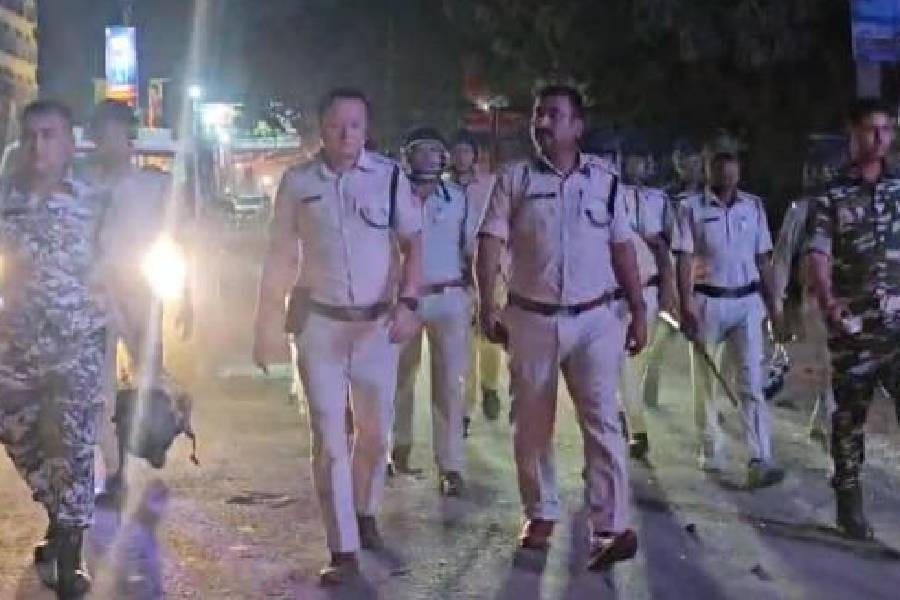
The site of the violence lies close to the local police station, yet residents alleged that the disturbance continued for a considerable time before effective intervention took place. Many claimed that both state police and central forces were present but did not act swiftly enough in the early stages.
Authorities later confirmed that a lathi-charge was carried out to disperse the crowd once the situation worsened. An official investigation has now been initiated, though no immediate arrests were reported at the time.
Among the injured was a municipal employee, who sustained serious head injuries after allegedly being attacked while passing through the area. He reported that his vehicle was destroyed and set on fire during the violence.
Several others also suffered injuries, and many affected families are now dealing with both physical and financial losses.
The incident quickly turned into a political flashpoint. Local BJP leaders claimed that the violence was triggered by provocation from the opposing side, alleging that attempts were made to block the procession, leading to clashes.
On the other hand, leaders from the ruling camp accused opposition forces of deliberately inciting unrest to influence voter sentiment ahead of elections. The blame game has further deepened political polarization in the region.
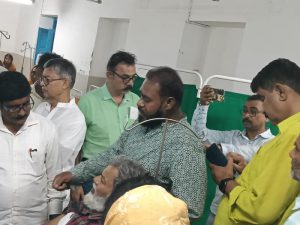
Meanwhile, CPI(M) leaders visited the hospital to meet the injured and criticized the administration, calling it a failure of governance and law enforcement.
Observers note that Ram Navami processions in recent years have increasingly taken on political significance in West Bengal. In mixed-population districts like Murshidabad, such events often become sensitive, especially during election periods.
Experts warn that repeated incidents like Jangipur violence may point toward a broader pattern of rising polarization, where religious events are increasingly linked with political strategies.
Jangipur Violence is not just an isolated clash—it reflects deeper concerns about communal harmony, administrative preparedness, and political tensions in the state.
With elections around the corner, such incidents raise critical questions about security, accountability, and the role of leadership in maintaining peace.