


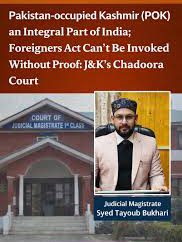
POK integral part of India, rules J&K court while acquitting Budgam couple. Court says Foreigners Act cannot apply as Pakistan-occupied Kashmir remains under illegal occupation, not foreign territory.
Qalam Times News Network
Chadoora, Jammu & Kashmir, January 30, 2026
Court Rules POK Remains Indian Territory
In a significant judicial pronouncement, a Chadoora-based Judicial Magistrate court has declared that POK integral part of India remains, while delivering acquittal to a Budgam couple charged under the Enemy Agents Ordinance and Foreigners Act. The verdict establishes a crucial legal precedent regarding the constitutional status of Pakistan-occupied Kashmir and the applicability of foreign entry laws.
Judicial Magistrate First Class Syed Tayoub Bukhari presided over the case and delivered the judgment that emphasized POK integral part of India continues to be despite illegal occupation by Pakistan. The court categorically stated that provisions of the Foreigners Act cannot be invoked against individuals from territories that constitutionally belong to India but are under forcible occupation.
Key Observations by the Court
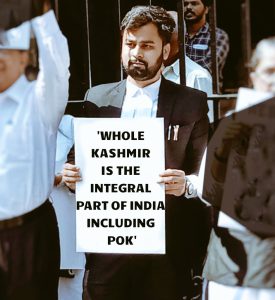
The judicial order explicitly stated, “Moreover, PoK is not a part of Pakistan; it is an integral part of India and has been illegally occupied by the other country. Therefore, the Foreigners Act has not been attracted to the accused persons.”
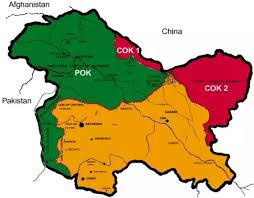
This legal interpretation draws from India’s constitutional position that Jammu and Kashmir, including territories currently under Pakistan’s control, form an inalienable part of Indian sovereign territory.
The magistrate further noted that prosecution authorities failed to establish essential elements of offences charged under Sections 2 and 3 of the Enemies and Interned Persons (Management of Property) Continuance Ordinance Act, commonly known as the E&IMCO Act, or Section 14 of the Foreigners Act.
“No overt act, mens rea, or illegal act attributable to the accused persons has been proved on record,” the court observed while delivering its reasoned judgment.
The case traces its origins to events spanning over two decades and reflects the complex border dynamics characterizing Jammu and Kashmir. According to prosecution allegations, Mohammad Maqbool Rather, a resident of Kralpora village in Chadoora tehsil of Budgam district, had crossed the Line of Control into Pakistan-occupied Kashmir approximately 21 years prior to the registration of the First Information Report.
Prosecution documents claimed that Rather underwent arms training while in occupied territory and subsequently married Parveena Akhtar, a resident of Bora Colony in Mirpur, located in Pakistan-occupied Kashmir. The couple reportedly had six children during their stay there.
The family later returned to the Indian side of Jammu and Kashmir without possessing valid travel documentation or immigration clearances. Upon return, Rather resumed ordinary civilian life, earning his livelihood as a taxi driver and engaging in carpet weaving work.
On August 8, 2012, the Crime Investigation Kashmir (CIK) Police Station in Srinagar claimed receipt of credible intelligence regarding Rather’s alleged activities. Acting on this information, police personnel intercepted Rather at a bridge location, conducted interrogation, and subsequently arrested both him and his wife.
Despite Rather’s denial of any connections with Pakistan or participation in arms training, authorities registered FIR Number 22/2012. The charges included Sections 2 and 3 of the E&IMCO Act, which address enemy agents and militant activities threatening India’s territorial integrity, along with Section 14 of the Foreigners Act, which penalizes violations concerning entry, residence, or departure of foreign nationals.
The investigation process extended over several years, with the charge sheet finally being submitted in 2018. Formal charges were framed against the accused during the same year. Both defendants pleaded not guilty and exercised their legal right to trial.
The prosecution cited eight witnesses to support its case. However, only two witnesses were actually examined during trial proceedings. Critically, the investigating officer and other crucial witnesses were never produced before the court. Consequently, prosecution evidence was formally closed in June 2025.
During cross-examination, the prosecution’s case began unraveling significantly. One examined witness admitted under oath that he possessed no personal knowledge or direct information about the accused ever traveling to Pakistan. The second witness completely retracted his earlier statement, characterizing the allegations as false and without any factual basis.
The court found these testimonies to be “unreliable” and insufficient to establish guilt beyond reasonable doubt, which remains the foundational standard in criminal jurisprudence.
After more than a decade of legal proceedings, the judicial magistrate observed that the prosecution’s entire case rested largely on unsubstantiated claims lacking corroborative evidence.
The judgment highlighted critical absences of documentary proof, including:
- Valid travel papers or passports
- Border-crossing records or immigration stamps
- Recovery memos documenting seized materials
- Intelligence reports substantiating allegations
- Material evidence linking accused to charged offences
These evidentiary gaps proved fatal to the prosecution’s case.
Emphasizing well-established principles of criminal law, the court remarked that “suspicion, however grave, cannot substitute proof beyond reasonable doubt.”
The judgment stressed that criminal convictions require concrete, admissible evidence that establishes each element of the charged offence to the satisfaction of judicial scrutiny. Mere suspicion, speculation, or unverified allegations cannot form the basis for criminal punishment.
The non-examination of the investigating officer represented a particularly significant procedural lapse, as this official could have provided crucial testimony regarding the investigation’s conduct, evidence collection, and factual findings.
Final Verdict and Directions
Consequently, the court acquitted both accused persons of all charges leveled against them. Their bail bonds were formally discharged, and specific directions were issued for the release of any property that may have been seized during the investigation or trial process.
The judgment represents a comprehensive application of criminal law principles while simultaneously making an important constitutional observation regarding the status of Pakistan-occupied Kashmir.
Legal and Political Significance
This verdict carries implications beyond the immediate case. By declaring that individuals from Pakistan-occupied Kashmir cannot be treated as foreigners under Indian law, the court has reinforced India’s constitutional position that these territories form an integral part of the nation.
Legal experts note that this interpretation aligns with India’s official stance that the entire former princely state of Jammu and Kashmir, including areas currently administered by Pakistan, constitute Indian territory under illegal occupation.
The judgment may influence future cases involving individuals from Pakistan-occupied Kashmir, particularly regarding the applicability of immigration and foreign national laws.
The case highlights challenges in prosecuting cross-border movement cases in conflict-affected regions, particularly when evidence gathering faces practical difficulties and extended time periods elapse between alleged incidents and formal charges.
It also underscores the importance of robust investigation procedures, proper documentation, and credible witness testimony in establishing criminal liability, especially in cases carrying serious national security implications.
The acquittal after more than a decade of legal proceedings raises questions about procedural efficiency and the human cost of prolonged litigation, even when charges ultimately prove unsustainable.