

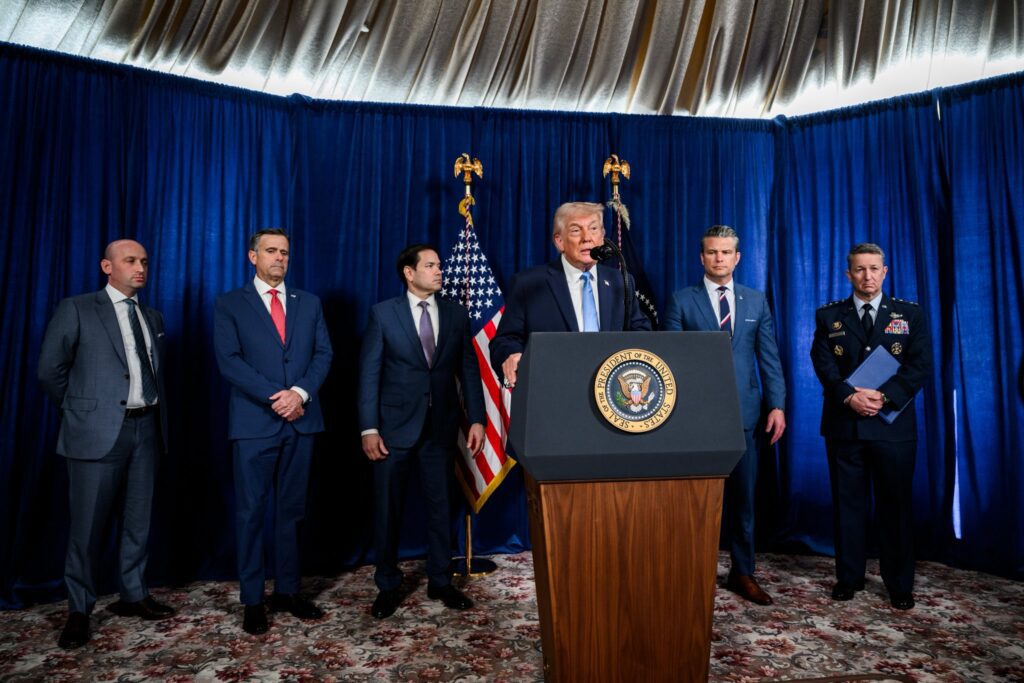
Escalation defines the latest US-Venezuela crisis as President Donald Trump threatens Colombia, Cuba, Mexico, and others following US strikes near Venezuelan waters, raising legal, human rights, and regional stability concerns.
By Qalam Times News Network
Washington | 6 January 2026
Escalation : Washington’s military actions near Venezuela trigger sharp rhetoric, legal scrutiny, and renewed regional tensions
Escalation is now the defining feature of US policy toward Venezuela and several countries across the Americas, as President Donald Trump issued a string of threats following recent US military strikes near Venezuelan waters. Speaking to reporters aboard Air Force One, Trump lashed out at Colombia, Cuba, Mexico, and even Greenland, while insisting that Washington remains firmly “in charge” of Venezuela despite international criticism.
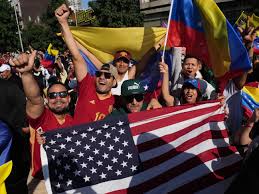
In unusually blunt remarks, Trump targeted Colombian President Gustavo Petro, accusing him of presiding over a country he described as “sick” and deeply entangled in the cocaine trade. The escalation in tone came as several Latin American governments condemned US actions in Venezuela, where strikes linked to Washington’s so-called “war on cartels” have reportedly killed dozens.
Trump’s Warnings Stretch Beyond Venezuela
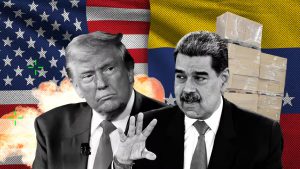
Trump’s comments were not limited to Colombia. He accused Mexico of losing control to criminal cartels and warned that the US would be forced to intervene if authorities there failed to “get their act together.” On Cuba, he claimed the government was on the verge of collapse and suggested that Washington would not need to take direct action to bring it about.
At the same time, Trump asserted US dominance over Venezuela, despite the country’s Supreme Court naming Delcy Rodríguez as interim leader following the reported abduction of President Nicolás Maduro. Trump warned that Rodríguez could face consequences “worse than Maduro” if she failed to comply with US demands, further intensifying the escalation in rhetoric.
Rodríguez, for her part, condemned the US operation as an act of aggression with what she called “Zionist undertones,” vowing that those responsible would be held to account.
Strikes at Sea Raise Legal and Human Rights Questions
The controversy has deepened after US forces carried out multiple strikes on small vessels near Venezuela’s coast, which Washington claims were involved in drug trafficking. According to US officials, the attacks occurred in international waters, but Venezuelan authorities dispute this, saying the strikes took place dangerously close to—or within—the country’s territorial zone.
Since early September, at least four such strikes have been reported, with the death toll rising to more than 20. The Pentagon has not released detailed evidence linking the targeted boats to narcotics networks, fueling skepticism among rights groups and legal experts.
Human Rights Watch described the attacks as “extrajudicial killings,” arguing that drug trafficking does not constitute an armed conflict under international law. Legal scholars have also questioned the Trump administration’s claim that the US is engaged in a “non-international armed conflict” with cartels, warning that this interpretation stretches both US constitutional limits and the UN Charter.
Regional Fallout and a Familiar Pattern
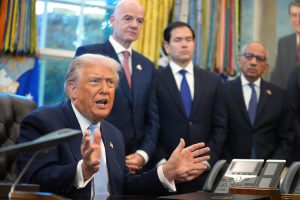
Analysts say the current escalation reflects a long-standing pattern in US foreign policy: the use of military force framed as moral enforcement rather than clear legal defense. Critics argue that such actions risk normalising militarised responses to criminal activity, blurring the line between law enforcement and warfare.
Regionally, the strikes and threats have revived deep mistrust of US interventionism, even among Washington’s allies. Observers warn that this approach could weaken cooperation across Latin America, embolden nationalist politics, and further destabilise an already volatile region.
US-Venezuela relations have been strained for decades, deteriorating sharply after the late President Hugo Chávez pursued socialist reforms and closer ties with US rivals. Under Maduro, tensions have only intensified, and Trump’s return to the White House has pushed the relationship into an even more confrontational phase.