

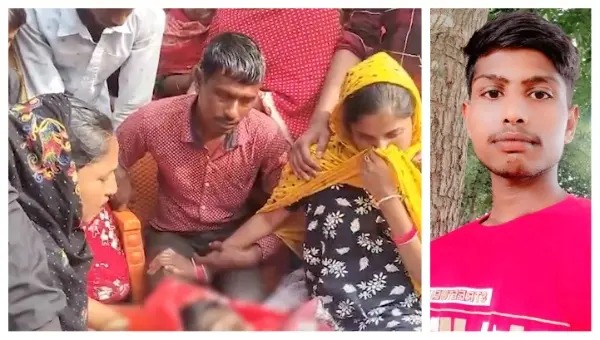
Identity Policing exposes the growing danger faced by migrant workers in India, as the killing of a Bengali Muslim labourer in Odisha highlights how language, faith, and poverty are being weaponized.
Dr. Mohammad Farooque | Qalam Times News Network
Kolkata | December 29, 2025
Identity Policing has quietly become one of the most dangerous realities on India’s political landscape.
Behind the glittering narrative of so-called “double-engine” states lies a grim truth: the systematic targeting of Bengali-speaking Muslim workers. The brutal killing of 19-year-old Jewel Sheikh from Murshidabad in Odisha’s Sambalpur district is not an isolated crime—it is the latest link in a chain of ideological violence that has normalized mob justice. The incident once again underlines a chilling fact: for the poor in today’s India, citizenship is no longer determined by courts or the Constitution, but by armed vigilantes patrolling the streets as self-appointed guardians of “national identity.”

What unfolded in Sambalpur was neither spontaneous nor accidental. According to eyewitnesses and fellow labourers, the attackers first approached the workers casually, asking for bidis. Moments later, the conversation turned sinister as they demanded Aadhaar cards. This pattern—now disturbingly familiar—has been reported across Uttar Pradesh, Haryana, Gujarat, and increasingly in Odisha. Even after valid identity documents were shown, the mob dismissed them as fake. In the name of Identity Policing, violence followed with ruthless precision. Jewel Sheikh’s head was repeatedly smashed against stones and hard surfaces; he later succumbed to his injuries in hospital. Throughout the assault, slurs like “Bangladeshi” and “infiltrator” echoed—terms carefully injected into public discourse over the past decade to manufacture suspicion against an entire community.

Equally disturbing is the official response. Police have attempted to downplay the incident, describing it as a minor dispute over bidis rather than acknowledging it as a hate crime. This familiar tactic—rebranding lynching as a routine quarrel—has become a shield for perpetrators. Since the BJP came to power in Odisha, such incidents have increased, sending a clear signal that in “double-engine” states, Bengali migrant workers are being pushed into ever tighter corners. From Delhi to Haryana, harassment based on language, dress, and accent, illegal detentions, and even attempts to forcibly push citizens across borders now appear part of a larger political design.
There is another painful layer to this tragedy. Mass migration from districts like Murshidabad and Malda reflects the collapse of employment opportunities in West Bengal itself. Under years of Trinamool Congress rule, jobs have dried up, corruption has flourished, and survival without influence has become nearly impossible. When a state cannot feed its own youth, they are forced to seek work in hostile lands—where humiliation and death await them. Caught between the political battles of the BJP and TMC, it is the poor worker who pays the price, sweating thousands of miles from home only to return in a coffin.
The evidence is clear: Identity Policing is not about security—it is about fear. It is a campaign to intimidate, exclude, and dehumanize. When mobs are allowed to decide who belongs and who does not, democracy rots from within. India’s strength has always rested on diversity and coexistence, but this rising culture of hatred is eroding that foundation. This is no longer a moment for hollow statements or partisan blame. It demands collective resistance against an ideology that reduces human beings to suspicious documents. If society remains silent today, history will remember that a worker was beaten to death in his own country simply because his language was different from those holding the sticks.