
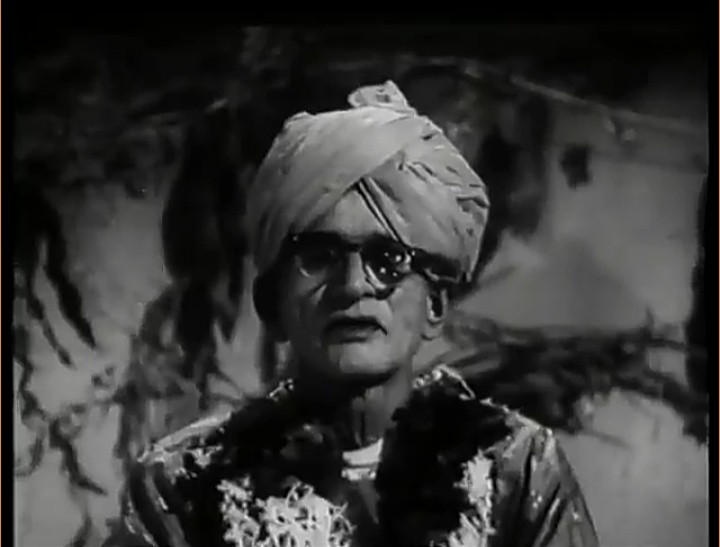
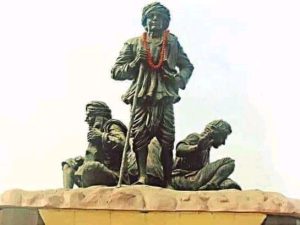
Legacy of Bhikari Thakur revisited as Hindi–Urdu Academy commemorates his death anniversary, highlighting his lasting influence on folk theatre, social reform, and Indian cultural consciousness.
By Qalam Times News Network
Patna 18 December 2025
LEGACY took center stage as the Hindi–Urdu Academy solemnly observed the death anniversary of the legendary Bhojpuri playwright, poet, folk performer, and social reformer Bhikari Thakur. The occasion served not only as a tribute, but also as a moment of thoughtful reflection on his unmatched contribution to Indian folk culture and socially engaged theatre. The Academy reaffirmed its mission to preserve artistic voices that emerged from the grassroots and spoke directly for the marginalized.
In his commemorative message, Academy Patron and Chairman Shamim Ahmed underlined the legacy of Bhikari Thakur as one that continues to resonate with contemporary realities. He noted that Thakur’s work remains relevant because it addressed fundamental human concerns—displacement, injustice, and dignity—through art forms that were accessible, direct, and deeply rooted in people’s lives.
An Artist Shaped by the Soil
Bhikari Thakur rose from rural Bihar to become one of the most influential figures in Bhojpuri literature and performance. His creative expression was born out of lived experience rather than academic tradition. Rejecting elite literary confines, his theatre thrived in village courtyards and open grounds, where ordinary people gathered not just to be entertained, but to be awakened.
Often described as the “Shakespeare of Bhojpuri,” Thakur blended storytelling, music, dance, and dialogue into a vibrant folk-theatre form. His pioneering role in establishing the naach tradition and introducing male actors in female roles expanded theatrical participation in conservative social environments. This legacy of inclusivity reshaped folk performance across regions.
Works That Questioned Society
The Academy’s report revisited Thakur’s major works, emphasizing their continued social relevance.Bidesiya captured the emotional toll of migration, especially the silent suffering of women left behind.
Beti Bechwa confronted the harsh realities of child marriage and the dowry system, exposing how patriarchal customs reduced young girls to transactions.
Gabarghichor raised uncomfortable questions about morality, legitimacy, and justice, challenging rigid social norms with rare ethical clarity.
His Nirgun Bhajans revealed a philosophical depth, reflecting on life’s impermanence and the need for inner awareness beyond ritual.
Through these works, Bhikari Thakur established himself not merely as a performer, but as a sharp social conscience.
The Hindi–Urdu Academy stressed that the concerns Thakur raised—migration, gender inequality, social hypocrisy, and economic hardship—remain unresolved today. As urbanization accelerates and social divides deepen, his art offers both critique and compassion. His ability to convey complex truths through folk idioms makes his work a powerful tool for cultural education and public awareness.
While firmly rooted in the Bhojpuri language, Bhikari Thakur’s contribution transcends linguistic boundaries. His themes echo across Hindi, Urdu, and other Indian cultural traditions, representing a shared folk heritage where art becomes a bridge rather than a barrier. His influence continues to shape folk singers, theatre groups, and performers across Bihar, Uttar Pradesh, and migrant communities in urban centers.

Under the leadership of Shamim Ahmed, the Hindi–Urdu Academy reiterated its commitment to promoting such inclusive cultural figures. The Academy proposed further research, translations, stage productions, and academic engagement with Thakur’s works to ensure that future generations remain connected to this enduring legacy.
The observance concluded with a shared understanding that remembering Bhikari Thakur is not a ritualistic act, but an engagement with ideas that demand ethical courage and social responsibility. His voice still echoes in folk songs, on modest stages, and in every honest question posed to society.
Bhikari Thakur endures as a guardian of collective conscience—an artist who proved that true literature does more than reflect life; it challenges it.
#