

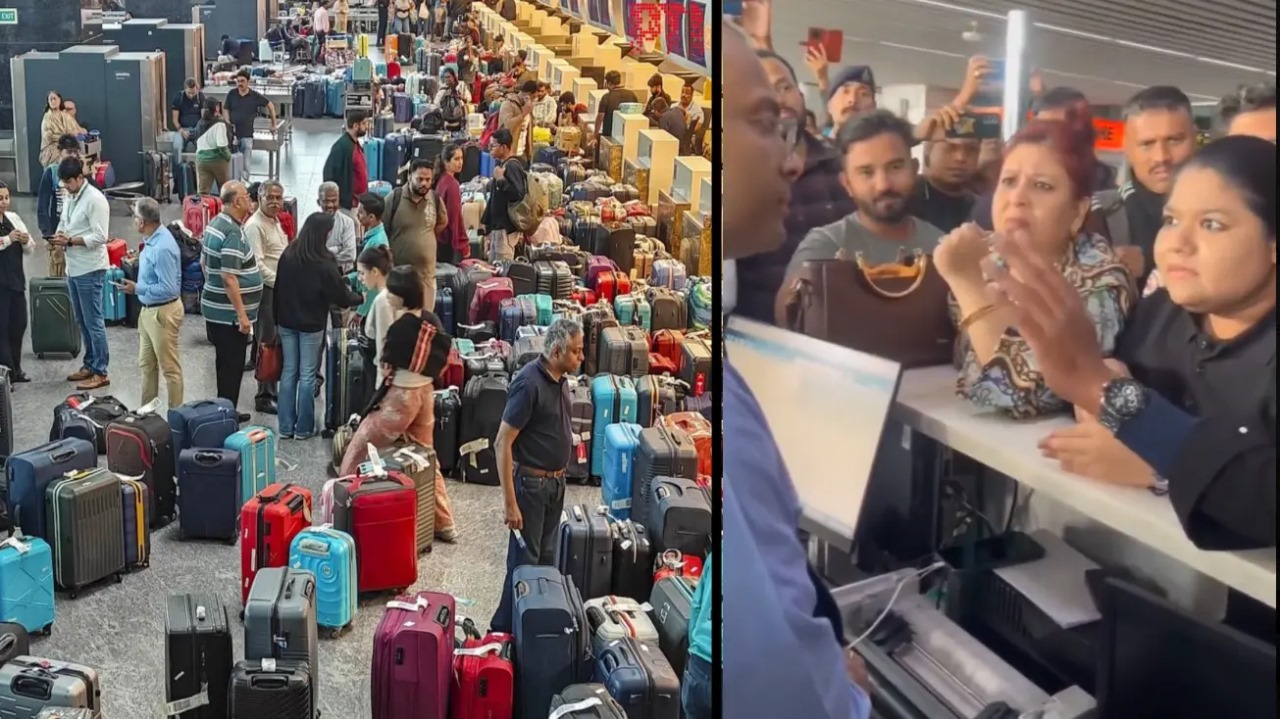
IndiGo Crisis deepens as allegations of political funding, regulatory leniency, and delayed FDTL compliance raise serious questions about India’s aviation ecosystem.
By Qalam Times News Network | New Delhi | December 10, 2025
Indigo: A Turbulence Deeper Than Operations
IndiGo Crisis has triggered a debate far beyond routine operational hiccups. For seven straight days, the airline cancelled hundreds of flights—after already scrapping more than 1,200 in November—leaving passengers stranded and the industry shaken. The airline described the chaos as part of a planned “reboot,” but critics say the story is far more layered.
A major flashpoint is the new Flight Duty Time Limitation (FDTL) norms. Instead of preparing for the November rollout, accusations suggest IndiGo spent crucial months lobbying the DGCA for exemptions or delays. And here’s where the narrative widens: the IndiGo Crisis is now being linked to political funding and preferential regulatory treatment.
Electoral Bonds Spark a Political Storm
The issue escalated when opposition parties flagged IndiGo’s substantial election funding under the now-scrapped electoral bonds scheme. Election Commission data for 2024 shows that InterGlobe Group—IndiGo’s parent—purchased bonds worth ₹36 crore, making it the transport sector’s largest buyer.
Most of these—31 bonds—were bought in May 2019, and the rest in October 2023. Even more striking, promoter Rahul Bhatia personally purchased 29 bonds worth ₹20 crore in April 2021, at a time when the aviation sector was reeling from the pandemic.
The only other airline buying electoral bonds was SpiceJet, with a comparatively tiny ₹65 lakh. With IndiGo controlling nearly 63% of India’s aviation market, the opposition argues the IndiGo Crisis exposes how policy and market power may have converged in favour of one dominant player.
Opposition Accuses Government of Building a Duopoly
Congress leaders claim the chaos is not accidental but the result of policies designed to create a two-player aviation regime dominated by IndiGo and the Tata Group’s airlines. Former finance minister P. Chidambaram said the aviation sector—like many others—has been reduced to a duopoly, despite liberalisation’s promise of healthy competition.
Congress MP Shashikant Senthil accused the government of allowing IndiGo to slip into non-compliance on the FDTL norms issued in January 2024. He asked why DGCA failed to enforce the rules, which were supposed to be fully implemented by November. Did the ministry ever warn the airline? Was it given unchecked freedom despite repeated lapses?
Senthil directly tied this leniency to electoral bond funding, alleging extraordinary indulgence toward IndiGo at the cost of passenger safety. “This is exactly why electoral bonds are dangerous,” he said.
A four-member government panel is now examining whether IndiGo lobbied DGCA until late October to delay the FDTL deadline instead of preparing for it. The probe will also review allegations that the airline deliberately withheld crew assignments, mismanaged scheduling, and created bottlenecks that rippled across the sector.
Another major angle is the delay in updating Jeppesen’s Boeing-owned crew rostering software, which was needed to implement the new norms. IndiGo has not responded to questions on these issues. The committee will also examine why IndiGo ignored DGCA’s request for readiness reports and why the regulator tolerated non-compliance despite a clear High Court order.
At this point, the IndiGo Crisis has morphed into a conversation about political–corporate networks, regulatory softness, and concentrated market power. The government’s inquiry may reveal more in the coming weeks, but for now, the public is left grappling with cancellations, delays, and a growing suspicion that the meltdown was anything but a routine operational failure.