

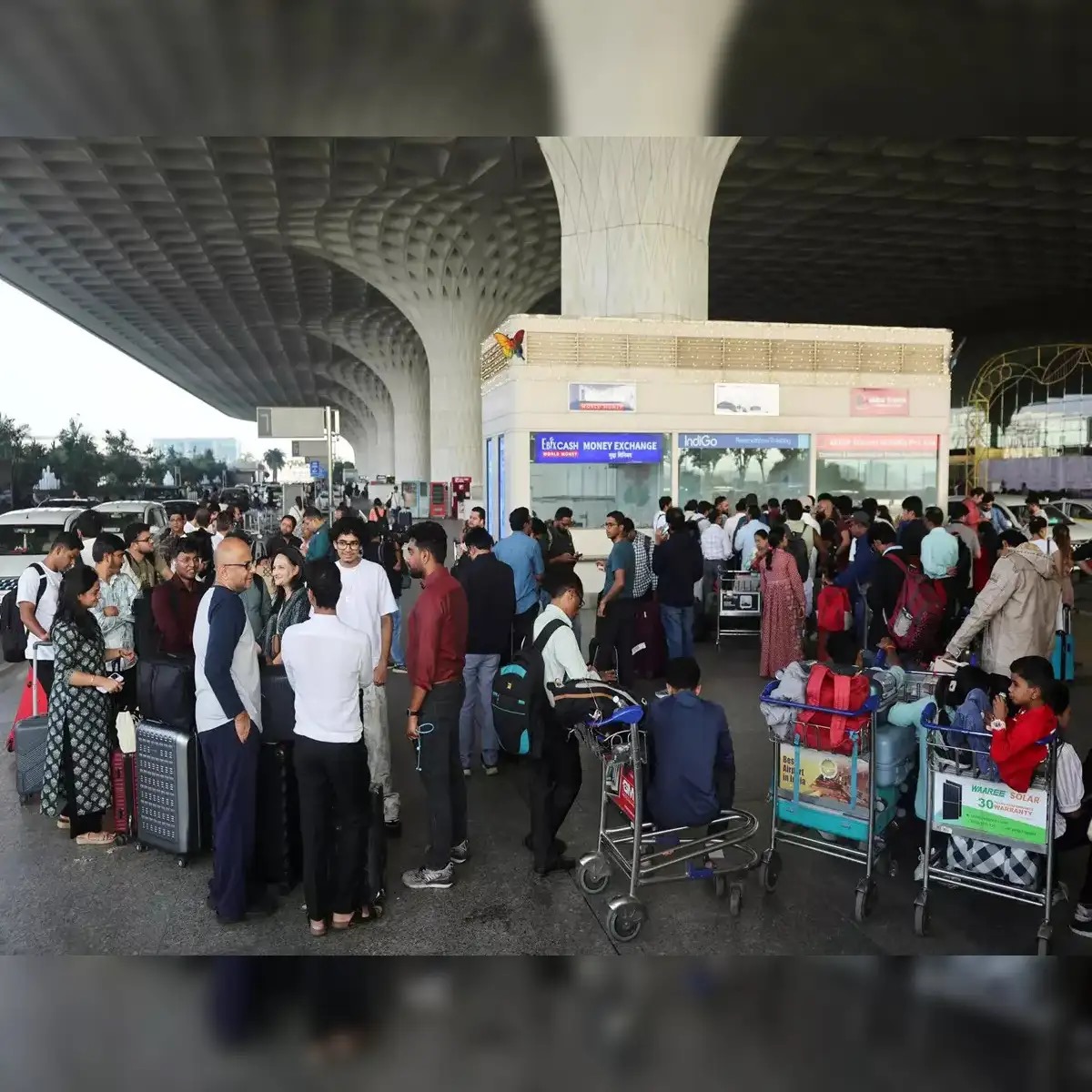
IndiGo crisis deepens aviation concerns in India as regulatory gaps, pilot-rest rules, and unchecked privatization expose systemic vulnerabilities across the sector.
By Qalam Times News Network | New Delhi | December 09, 2025
Indigo: A Week of Paralysis and Mounting Questions
IndiGo sits at the center of a crisis that has stretched well past a week, and the country’s aviation network is still struggling to regain its balance. What makes the situation even more striking is that this breakdown wasn’t triggered by any mechanical failure. Instead, questions are swirling about whether deliberate business decisions—rather than unavoidable disruptions—pushed India’s largest private airline into this storm.

Even more troubling, critics argue that the regulator, DGCA, ended up giving IndiGo indirect room to operate without adequate checks. The government, too, seemed oddly passive, taking no preventive measures despite early warning signs and remaining largely idle even after the disruption began.
In a nation that proudly calls itself the world’s third-largest aviation market, such an avoidable standstill raises serious doubts about governance. The IndiGo episode has hit at the core of the government’s narrative of a rapidly advancing economy. When the country aspires to global leadership, a meltdown of this scale feels like a sharp contradiction.
Let’s break it down. India’s aviation boom was driven by liberalization that allowed private carriers to mushroom rapidly—often without strong financial requirements, rigorous safety oversight, or strict operational standards. Low fares became the selling point, and safety norms quietly slipped into the background. Ageing aircraft flew longer than advised, maintenance windows shrank, and crew members were stretched to their limits. Profit took priority; caution became optional.
Over time, India’s passenger aviation moved almost entirely into private hands. Air India went to the Tata Group, major airports to the Adani Group, and the market itself became heavily concentrated. Today IndiGo holds nearly 60% of domestic share, with Tata-owned airlines controlling over a quarter.
In such a landscape, a powerful carrier can effectively dictate terms. And that’s exactly why many observers believe the system bent when IndiGo resisted implementing new international-standard duty-and-rest norms for pilots—rules that were meant to start earlier this year. Political patronage and financial influence allegedly helped stall the rollout. Only a court order finally enforced compliance in November.
But IndiGo didn’t expand its workforce to meet the new requirements. When the rules kicked in, the staff shortage collided with tight schedules, and the result was the nationwide aviation paralysis India is now grappling with.
This isn’t just about one airline. It’s a reminder of what happens when oversight weakens and major players gain unchecked dominance. If an airline holding 60% of the market can bring the system to a halt, what does that say about structural vulnerability?
The fear now is simple: if telecom giants like Jio or Airtel ever use similar leverage, entire communication networks could go silent. The aviation turmoil may be a preview of what unbalanced privatization can cost a country.