

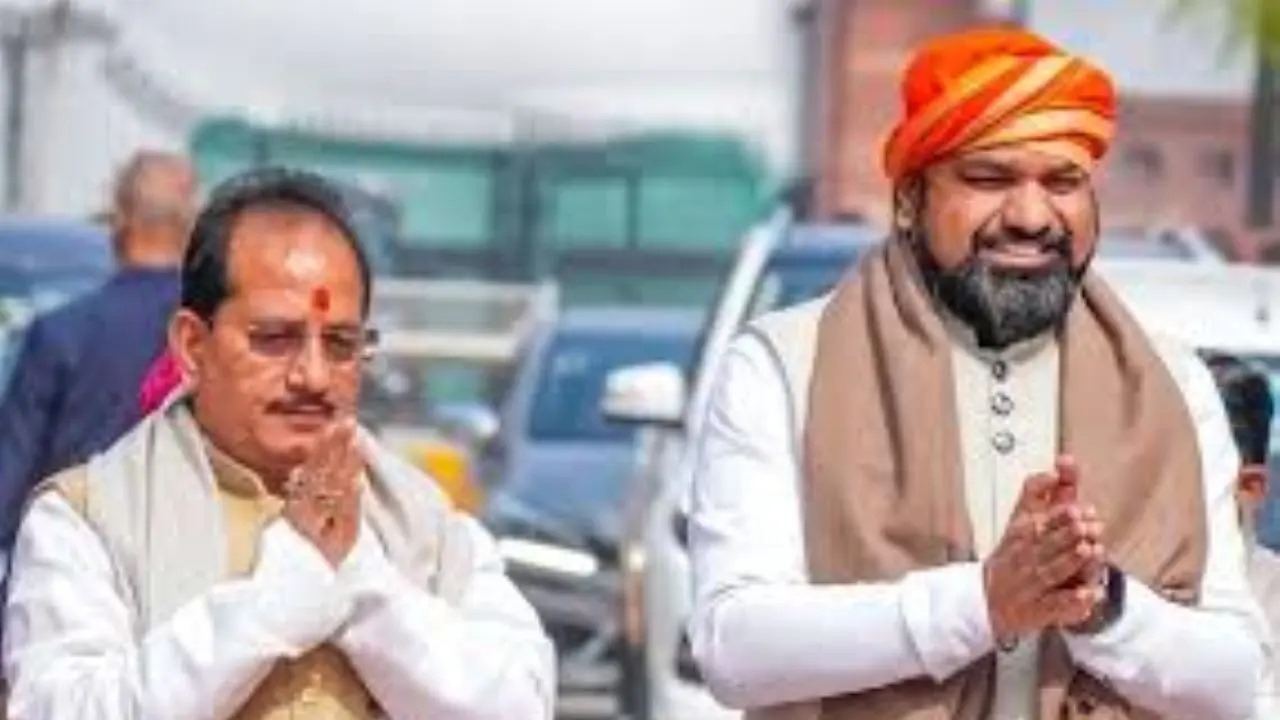
Bulldozer Politics shapes Bihar’s new power structure as BJP’s two deputy chief ministers—Samrat Choudhary and Vijay Kumar Sinha—navigate an internal rivalry in the early days of the new government.
By Qalam Times News Network
Patna | 05 December 2025
Bulldozer Politics has become the phrase echoing across Bihar ever since Nitish Kumar took oath for a record tenth term. At first glance, it looks like an imported script from Uttar Pradesh, where bulldozers became a symbol of authority. But when you look closer, the buzz in Bihar seems far more tied to a tug-of-war between the BJP’s two deputy chief ministers—Samrat Choudhary and Vijay Kumar Sinha—than to any sweeping administrative shift.
Here’s the thing: Bulldozer Politics is feeding off an old rivalry inside the BJP. Unlike earlier coalitions—when Sushil Kumar Modi operated as the party’s lone deputy chief minister—the BJP has now paired a leader from an OBC background, Samrat Choudhary, with an upper-caste heavyweight, Vijay Kumar Sinha. The political chatter in Patna suggests that Choudhary often receives more prominence, and Sinha is anything but pleased.
Vijay Kumar Sinha’s statements carry the unmistakable flavour of Bulldozer Politics—assertive, punitive, and heavy on symbolism. Samrat Choudhary, meanwhile, repeatedly insists that Bihar is not embracing any “bulldozer raj.” He frames current anti-encroachment actions as routine exercises guided by court orders, not political machismo.
But beneath that clarification lies another message: he doesn’t endorse Sinha’s aggressive tone.
This contrast matters because the BJP now controls the Home Department for the first time, making Choudhary directly responsible for policing and administrative enforcement. The moment this shift happened, reports of bulldozer-led demolitions began surfacing from scattered pockets of the state—enough to ignite comparisons with Uttar Pradesh.
Why the ‘Bulldozer’ Debate Feels Different in Bihar
Bihar has used bulldozers before, but the term “bulldozer raj” implies something else—a disregard for due process, often weaponised against a specific community. Critics argue that sections of BJP supporters are pushing the Bulldozer Politics narrative to seed polarisation and project a new kind of governance under the party’s expanded influence.
Choudhary tried to shut down that line of argument in the Assembly, saying he neither calls himself “Bulldozer Baba” nor subscribes to that image. He painted Bihar as a state defined by rule of law, with Nitish Kumar’s governance model as its anchor. That was not just rebuttal to the opposition—it was also a subtle distancing from his colleague Sinha.
Vijay Kumar Sinha, known for his sharper political style, seems determined to give Bulldozer Politics a more assertive meaning. His remarks about “rolling bulldozers over land, sand, and liquor mafias” and “the changing political weather of Bihar” are being interpreted as a hint that he envisions a post-Nitish political order—one where the BJP sets the tone.
This isn’t their first clash, either. Political observers still recall the infamous “vyakul mat hoiyega” exchange when Sinha was Assembly Speaker and Choudhary openly took a swipe at him.
A Battle for Dominance Beneath the Headlines
Choudhary positions himself as measured, loyal to Nitish Kumar’s style of governance, and intent on avoiding communal overtones. Sinha, on the other hand, projects himself as the face of hard action.Between these two visions lies the real story: Bulldozer Politics in Bihar is less about demolition drives and more about who will dominate the BJP’s future power structure. As Bihar watches closely, the bulldozer is no longer just a machine—it has become a metaphor for a struggle within the ruling alliance itself.
Choudhary’s stance is measured, institutional, and loyal to the coalition’s established culture. Sinha’s tone is sharper, forward-leaning, and consciously crafted to appeal to a segment of the party that wants a more aggressive posture.
Between these two approaches lies the actual story: Bulldozer Politics in Bihar is not really about demolition drives. It is about political positioning, internal dominance, and the shaping of the BJP’s long-term leadership architecture in the state.
For now, the bulldozer is just a machine. But in Bihar’s evolving political script, it has become a symbol of ambition, competition, and the battle for the party’s future.